Industrial designs in motion: Video and 3D as new forms of presentation
Starting from 1 July 2026, it is possible to seek protection of industrial designs that are not reduced solely to a static drawing or photo. This is an effect of entry into force of the new Regulation (EU) 2026/715 of the European Parliament and of the Council of 11 March 2026 on European Union designs.
Expanded definition of industrial designs
Under the new Art. 4(1) of Regulation 2026/715, a “design” is defined as “the appearance of the whole or a part of a product resulting from the features, in particular the lines, contours, colours, shape, texture and/or materials, of the product itself and/or of its decoration, including the movement, transition or any other sort of animation of those features.”
This means that the features of a design may be determined not only by its static appearance, but also how it changes in time.
The rationale for this approach is explained in the preamble to Regulation 2026/715, stating that “the rise of information technology has entailed the advent of new designs which are not embodied in physical products,” and thus “animation, such as movement or transition, of the features of a product can contribute to the appearance of designs, in particular designs that are not embodied in a physical object” (recital 13).
The lawmakers’ broader view is also reflected in the definition of “product.” Thus a product whose design is protected may be “any industrial or handicraft item, other than a computer program, regardless of whether it is embodied in a physical object or materialises in a non-physical form,” including “packaging, sets of articles, spatial arrangements of items intended to form an interior or exterior environment,” as well as “graphic works or symbols, logos, surface patterns, typographic typefaces, and graphical user interfaces.”
Why this is relevant
The scope of protection of an industrial design filed in the form of movement, transition or animation will be determined by what is actually shown in the video material or moving presentation, and not by the verbal description or supposition as to the intended visual effect.
According to recital 10 of Regulation 2026/715, “protection is conferred on the right holder, by way of registration of an EU design, for those design features of a product, in whole or in part, which are shown visibly in an application for registration of such design and made available to the public by way of publication.” This confirms that movement, transition or other form of animation of a product’s features—recognised in the definition of a “design” as a full-fledged element of the appearance—is subject to the same general rule as static features.
For a product to enjoy design protection, its design features do not have to visible at any specific moment or in any specific use situation. It is sufficient for the animated feature to be revealed during the course of a typical use cycle. It is not necessary for the entire sequence of movement or animation to be uninterruptedly visible.
If, however, the animation is a feature of a design applied to part of a complex product (for example, dashboard illumination as a component of an automobile, or an animated icon on a device’s interchangeable display module), then, under the exception provided, this animated feature, like any other feature of a component part, must be visible during ordinary use of the complex product.
Strengthening the scope of protection of designs
It is worth noting the recital referring to new technologies for printing and reproducing designs. In light of the growing deployment of 3D printing technologies in different areas of industry, including with the help of AI, Art. 20(2)(d) provides that creating, downloading, copying, sharing or distributing any medium or software which records the design for the purpose of enabling a product incorporating or applying a protected design to be made, constitutes the use of an industrial design requiring the consent of the holder.
The holder of an EU design thus gains the important right to act against the making of copies of the design using 3D printing technology.
New possibilities for creators and businesses
Expansion of the definition of an industrial design, and the possibility of presenting it in the form of movement, transition or animation, offers a new perspective on obtaining protection for designs which include spatial shifting of elements (such as interior designs, or interactive/digital visual solutions). Such designs may reflect the actual effect of the work of individual creators, interface designers, animators, game developers, or designers of digital products. To obtain protection, it is not necessary to reduce them to static views.
Presenting a design in video or 3D form also allows the applicant to show the product in the manner in which it is actually perceived by the user, from multiple sides and angles. This is thus a more precise tool for conveying the actual character of the design. For businesses, particularly in industries such as high tech, gaming, or automotive, manufacturers of devices with a complex, spatial construction, as well as designers of interiors and designers employing movement, transition and animation, this may be the best method for presenting the features of the protected design and expressing the character of the design. For sectors whose products are characterised by a brief life cycle, this could also offer a simpler and faster track to obtaining protection covering the actual appearance of the product.
What the EUIPO practice already shows
According to the European Union Intellectual Property Office, the new form of presenting industrial designs is attracting a lot of interest. Since 1 July 2026, 22 EU designs presented in 3D have been filed with EUIPO, and more than 30 with the help of video.
The first registrations of such designs reveal the practical dimension of this change and the flexibility applicants have in presenting designs in this way:
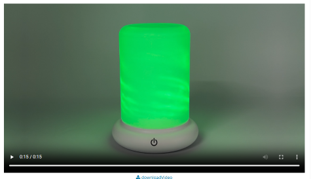
Design no. REUD 015146726-0001, presented as a video, protects a table lamp that changes colours in a specified way
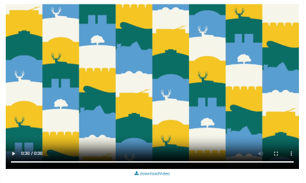
Design no. REUD 015147078-0002, presented as a video, protects an animated graphic work
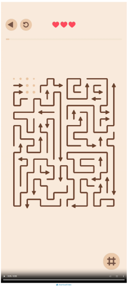
Design no. REUD 015147163-0012, presented as a video, protects an animated graphical user interface for a mobile game developed by the German company Lessmore GmbH
This raises the question whether presentation of industrial designs in the form of movement, transition or other manner of animation—through video or a 3D model—will become more popular than static presentation of designs in a drawing or photograph. It is also an open question whether the scope of protection of designs as defined in this way will truly be broader, and how the possibility of challenging such designs will actually work.
No doubt the practice will provide an answer to these questions, which will make it worthwhile to pay attention to new filings for protection of industrial designs.
Anna Żebrowska, patent attorney, Intellectual Property practice, Wardyński & Partners